Precision & Innovation with Radwan Yousaf Extrusion LLC in Metal Solutions
Radwan Yousaf Extrusion LLC, a subsidiary of CTI Group Germany, is a trusted provider of high-quality metal casting solutions. Known for innovation and precision, we deliver reliable components that meet top industry standards.
AbOUT US
About Our Metal Casting Company
CSG Extrusion LLC, led by Radwan Yousaf, is a reputable Metal Casting Company and a proud subsidiary of CTI Group Germany. Since our establishment, we have built our reputation on delivering exceptional craftsmanship, precision engineering, and uncompromising metal casting quality. As a trusted Metal Casting Company, we specialize in producing high-performance cast components for various industries, including construction, marine, automotive, and manufacturing. From the initial mold design to the final quality inspection, our skilled team follows strict quality control standards to ensure accuracy, durability, and reliability. As a result, clients across the UAE and beyond consistently choose our Metal Casting Company for dependable solutions, superior products, and long-lasting performance.
Precision Metal Solutions
Tailored Manufacturing Services
Industrial Expertise
Innovation & Technology
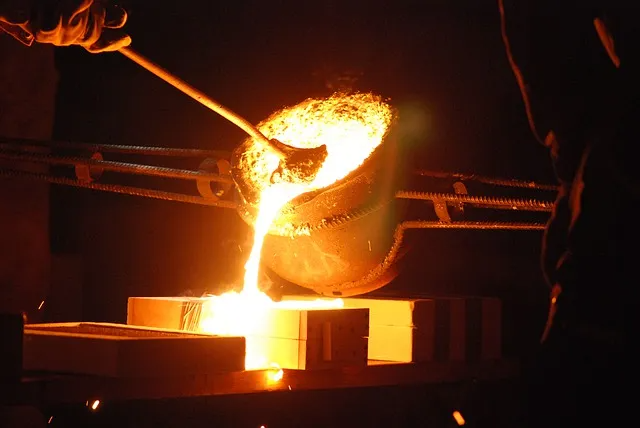
Your Talent. Our Expertise.
From crafting high-quality metal extrusions to supporting diverse industries, every solution is designed to deliver strength, precision, and long-lasting performance.
Our Metal Casting Services
At CSG Radwan Yousaf Extrusion LLC, we stand out as a leading metal casting company, providing precision machining services tailored to complex industrial demands. Thanks to advanced facilities and expert craftsmanship, we manufacture a wide range of metal components, including sleeves, motor bodies, gears, flanges, pulleys, and crusher plant parts such as hammers, arms, and plates.
Aluminium Bronze Casting
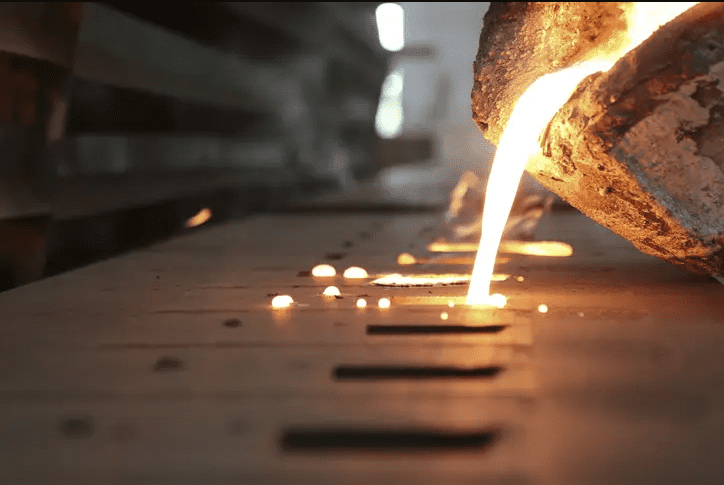
About Our Metal Casting Company
CSG Extrusion LLC, led by Radwan Yousaf, is a reputable metal casting company and a proud subsidiary of CTI Group Germany. From the very beginning, we’ve built our reputation on uncompromising metal casting quality. Whether it’s the first mold or the final inspection, our team upholds strict standards to ensure excellence. As a result, our clients consistently receive dependable and durable cast components.
Metal Casting Services
- Cast Iron Casting
- Aluminum Casting
- Brass Casting
- Bronze Casting
Precision Machining Services for Metal Casting
- Lathe Works
- Milling Works
At Radwan Yousaf Extrusion LLC, excellence in metal casting and extrusion is more than a goal, it’s a core value. We don’t just deliver high-quality products; we provide lasting peace of mind. To ensure this, we continually refine our processes to ensure client satisfaction at every stage of production. Furthermore, as a dependable industry partner, we focus on building long-term relationships based on trust, performance, and consistency. Above all, our clients remain at the heart of everything we do, driving our unwavering commitment to quality, innovation, and reliability in the metal casting industry.
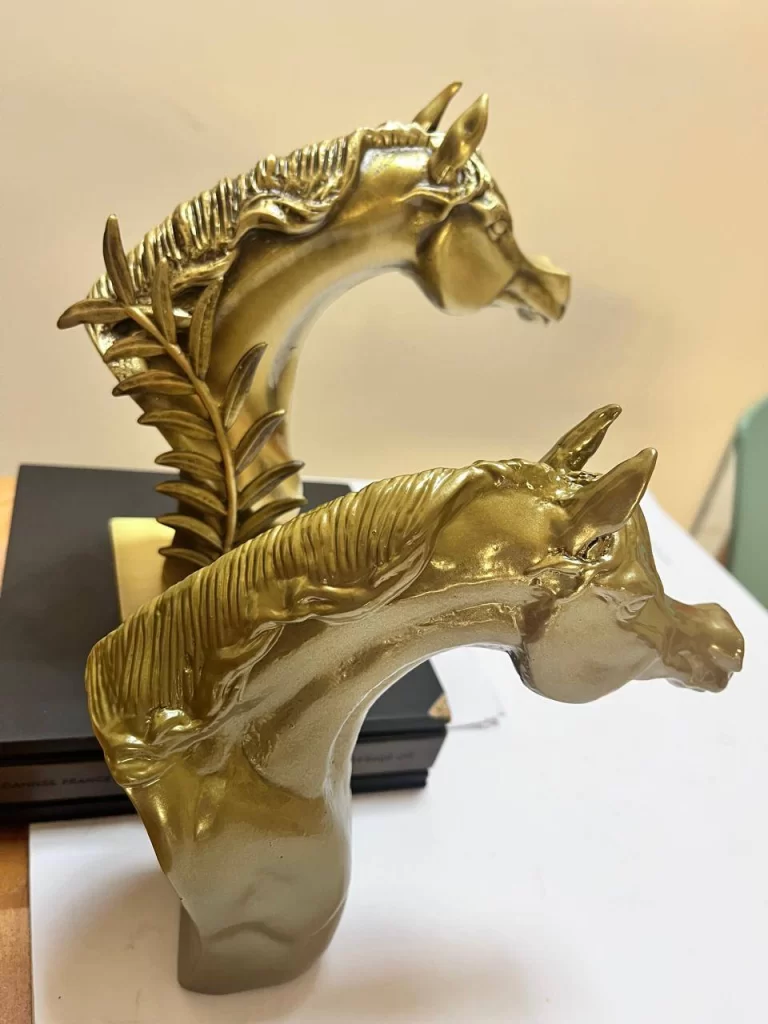

Metal Casting Products and Custom Components
As a leading Metal Casting Company, we specialize in manufacturing a diverse range of cast and extruded products that serve multiple industries, including construction, automotive, electrical, marine, packaging, and industrial engineering. As a trusted Metal Casting Company, our team focuses on delivering precision-engineered components designed for strength, durability, reliability, and long-term performance. Every product undergoes rigorous quality control procedures to ensure compliance with international standards and the unique requirements of our clients.
Product
Our extensive product portfolio includes aluminum castings, bronze castings, brass propellers, pump components, zinc anodes, and custom-engineered parts tailored for a wide range of industrial applications. As an experienced Metal Casting Company, we have the expertise and advanced manufacturing capabilities to produce complex shapes, intricate designs, and high-volume production runs with exceptional accuracy and consistency.
Using state-of-the-art casting and extrusion technologies, we ensure superior material quality, dimensional precision, and dependable performance in every batch. Our commitment to innovation, quality craftsmanship, and customer satisfaction has made us a preferred partner for businesses seeking reliable metal casting and extrusion solutions across local and international markets.
Industries We Serve
Custom Metal Extrusions Tailored for Every Industry
Construction Industry
We provide high-quality metal and aluminium extrusions for the construction industry, delivering durable, precise, and custom solutions for structural frameworks, facades, and architectural applications.
Automotive Industry
Our precision-engineered extrusions are designed for the automotive sector, offering lightweight, durable, and high-performance components to meet the demands of modern vehicles.
Aerospace Industry
As a trusted Metal Casting Company, we deliver advanced aluminium and metal solutions for aerospace applications, ensuring exceptional strength, reliability, and precision for aircraft components.
Marine Industry
Our custom extrusions and metal solutions are ideal for marine applications, offering corrosion resistance, durability, and precision to withstand challenging marine environments.
Industrial Machinery
We supply high-quality extrusions and metal components for industrial machinery, providing robust, precision-engineered solutions for equipment and manufacturing systems.
Energy & Power Sector
As a leading Metal Casting Company, we provide durable, precise, and high-performance metal solutions for the energy and power industries, supporting electrical, solar, and mechanical systems with reliable cast components.
Electronics & Electrical
We manufacture aluminium and metal extrusions for electronics and electrical applications, ensuring accuracy, heat resistance, and superior conductivity where needed.
Transportation & Railways
We provide durable and precision-engineered metal extrusions for the transportation and railway sector, delivering reliable components for trains, and infrastructure projects.


FAQ's About Our Metal Casting
What is sand casting?
Sand casting is one of those old manufacturing tricks that never really went out of style. The idea is simple: use sand to shape molten metal. But once you look closely, it’s a little more detailed than that.
How it actually works
You start with a pattern, a copy of whatever part you want to make. This can be carved from wood, sometimes metal, depending on the job. Workers press that pattern into sand mixed with binding agents, which forms a cavity. After removing the pattern, the empty cavity is filled with molten metal. When the molten metal has cooled and become solid, the sand mold is broken away to release the final casting. What you get is a rough piece that then goes through cleaning, machining, and finishing.
Why it matters
The strength of sand casting is flexibility. It can handle very complex shapes without breaking the budget, and it works for huge parts, think engine blocks or heavy pump casings. For many companies, it’s simply the most affordable way to get a solid piece of metal shaped right.
Where it shows up
It shows up in so many places, from the car you drive, to airplanes in the sky, even in the big machines used in factories. Engine parts like cylinder heads often come from sand casting. Aerospace engineers use it for tricky housings. Factories rely on it for pumps and valves that keep operations moving.
The downsides
Of course, there’s a trade-off. The surface isn’t smooth; it usually comes out a bit rough. Precision is also not its strongest point. In many cases, the finished casting still requires some machining work to achieve precise dimensions. That’s the price you pay for versatility and low cost.
Why we use sand casting process?
Sand casting is picked by many industries because it’s practical and doesn’t need heavy investment. You can use sand casting for tiny parts or huge ones, and it handles different metals without much trouble.
Advantages of Sand Casting
Cheap to set up, that’s why it’s handy for small or medium-sized batches.
Handles tricky shapes, Parts with unusual designs or hollow areas can be made easily.
Good for big pieces, Heavy machinery bases or engine blocks are commonly made this way
Works with many alloys, Iron, steel, aluminum, bronze, all can be cast in sand molds.
Faster to start, Lead times are often shorter compared to other casting methods, making it useful for prototypes.
Applications
- Prototyping and testing of new designs.
- Low-volume production where investing in dies isn’t practical.
- Large and complex parts that need strength as well as detail.
- When to Choose Sand Casting
- If the part has complex curves or hollow sections.
- If the size is large and heavy.
- If the order quantity is small to medium.
- If budget control is important.
What’s the Procedure for Metal Casting?
The process isn’t complicated, but each step matters if you want a clean final part.
Step by step:
- A pattern of the part is made, this gives the mold its shape.
- The mold is created, usually from sand.
- Metal is melted and then poured carefully into the cavity.
- It stays in the mold until it cools down and becomes solid.
- Once solid, the mold is broken open to get the part out.
- The casting may go through finishing work like trimming or machining to meet final specs.
Common types of casting:
- Sand casting for large or complex pieces.
- Investment casting for high detail.
- Die casting for mass production.
- Permanent mold casting when repeat accuracy is needed.
What to keep in mind:
- The choice of metal alloy.
- Good mold design so the metal flows properly.
- Temperature control during melting and cooling.
- Quality checks to avoid defects.
Metal casting shows up everywhere, car engines, airplane parts, pumps, valves, and even heavy industrial machines.
Why Aluminum Casting is So Popular?
Aluminum casting, people love it, and for good reason. First, it’s really light. Like, way lighter than steel, so if you’re making car parts or airplane stuff, it’s a no-brainer. It also doesn’t corrode easily. You don’t have to worry about rust eating it up, which saves a ton of maintenance. That’s why a lot of industrial and outdoor stuff uses it. Strength? Surprisingly good. For something so light, it can hold up under stress, so engineers use it in structural parts a lot. And it’s great with heat too, cooks the food evenly, handles engine heat, whatever. And the best part? You can just melt aluminum down and use it again. It’s great if you want to cut down on waste and make the most of your materials.
Where It Shows Up
- Cars: engine blocks, cylinder heads, basically heavy-duty bits.
- Airplanes: complex components where weight matters a lot.
- Factories: pumps, valves, industrial machinery stuff.
- Everyday things: cookware, electronics, little gadgets… seriously, everywhere.
Why People Stick With It
- You can make complicated shapes easily.
- It’s cheaper than a lot of other metals.
- Environmentally friendly because you can recycle it.
Basically, aluminum casting is a favorite because it’s light, tough, doesn’t rust easily, can be shaped into all sorts of things, and you can reuse it. No wonder it’s everywhere.
What is crucial component in SG iron casting?
Graphite nucleation: The formation of spheroidal graphite in ductile iron starts at graphite nucleation sites. These sites are essential for getting that characteristic round graphite structure.
Magnesium treatment: Adding magnesium is a must. Magnesium treatment is what helps graphite form into little round nodules. That’s basically what gives SG iron its special properties.
Inoculation is all about adding something like ferrosilicon. It makes the graphite grow evenly and keeps the structure consistent.
Chemical composition matters too. Watch your carbon, silicon, and manganese levels carefully. If any of them are off, too much or too little, the casting just won’t perform right.
Why It Matters
Microstructure: Those round graphite nodules are what make SG iron tough, flexible, and strong.
Mechanical Performance: SG iron castings are tough. They can handle stress, take hits, and stretch under tension without breaking, which makes them perfect for heavy-duty work.
What type of components we are making in bronze casting?
Bronze casting is really handy. You can make all sorts of parts, some practical, some decorative.
Bearings and bushings: These slide smoothly and last long. Bronze is great for that.
Valves and fittings: Strong, resists rust, works well in plumbing or machines.
Sculptures and art: Bronze doesn’t just last, it looks good too. Perfect for statues.
Gears and machine parts: Tough and low-friction. Keeps machines running.
Marine parts: Ships, propellers, fasteners. Bronze stands up to seawater.
Why Bronze?
Bronze is tough. It doesn’t rust much and can handle a lot of stress. Parts that move over it just slide without much trouble.
Where You See Bronze
Industry: Machines, tools, equipment.
Marine: Boats, docks, propellers.
Art: Statues, decorative pieces.
Bronze casting isn’t complicated, but it’s flexible. You get parts that last, work well, and sometimes even look great.
How lathe works is beneficial in industrial field?
Lathes are simple, but super useful. They help shape metal or wood and make parts fit perfectly. That’s why factories depend on them.
Why Industries Use Lathes
- Precise work: You can make parts that fit perfectly. No guessing.
- Do lots of things: Lathes can turn, drill, thread, or face a piece. One machine, many jobs.
- Work faster: Machines run quickly, so production speeds up.
- Smooth finish: Parts come out neat. Less extra work later.
- More output: They can run long hours, so you get more done with fewer people.
Where You See Lathes
- Planes and spacecraft: Tiny, precise parts need a lathe.
- Cars: Crankshafts, camshafts, engine bits.
- Factories: Tools, machines, general equipment.
- Oil and gas: Drill bits, valves, other parts that must be strong.
- Why They’re Handy
- Accurate: Parts meet specifications every time.
- Flexible: One lathe can do jobs that would take multiple machines.
- Saves money: Less waste, less labor, faster production.
Lathes are still all over the place. Strong, simple, and flexible, they help get tough jobs done and keep things moving in factories.
What types of Lathe Machines are available?
Common types of Lathe Machines accommodate machine lathes, turret lathes, CNC lathes, and bank lathes and are advised for specific tasks like attention machining or accumulation products.
What are Lathe Works used for?
Lathe Works enable manufacturers, automotive companies, aerospace firms, and metalworking industries to produce custom-made parts, shafts, and precision-engineered components with high accuracy and consistency.
Why is Precision Casework Important in Metal Casting?
Precision Casework ensures that molds and tooling are manufactured to exact specifications, resulting in high-quality metal components with minimal defects. This accuracy improves product durability, reduces production costs, and helps maintain consistency across high-volume manufacturing.