Aluminium bronze has become a widely used material for marine castings because it combines high strength, seawater corrosion resistance, wear resistance, and durability. These properties make it suitable for demanding marine components such as valves, pump parts, propellers, fittings, and other cast components exposed to seawater. For marine industries in Dubai, where equipment can face seawater, humidity, heat, and demanding operating conditions, selecting the right casting alloy is essential.
1. Excellent Resistance to Seawater Corrosion
One of the biggest advantages of aluminium bronze is its resistance to corrosion in seawater. Nickel aluminium bronze alloys can develop a protective oxide layer that helps reduce further corrosion. This makes them suitable for components that remain in contact with seawater for extended periods.
This property is particularly useful for:
- Marine valves
- Pump castings
- Ship propellers
- Valve stems
- Marine fittings
- Heat exchanger waterboxes
These applications have used aluminium bronze alloys for decades.
2. High Strength for Demanding Marine Applications
Marine components often operate under mechanical loads, pressure, vibration, and water flow. Aluminium bronze offers a useful combination of strength and corrosion resistance, which helps manufacturers produce durable components for demanding service conditions.
Nickel aluminium bronze is particularly important where higher mechanical performance is required. Its alloying elements can improve strength and influence the material’s microstructure and corrosion performance.
3. Strong Wear and Erosion Resistance
Marine castings may experience continuous water movement, friction, and erosion. Aluminium bronze offers good resistance to wear and erosion-corrosion, making it useful for components exposed to moving seawater.
However, alloy selection and component design remain important because extremely high seawater velocities and turbulence can damage the protective surface film of nickel aluminium bronze.
4. Ideal for Marine Valves and Pump Components
Aluminium bronze is commonly used for marine valves, fittings, pumps, pump shafts, and valve stems. These components need materials that can tolerate both mechanical stresses and exposure to seawater.
For Dubai marine and offshore applications, aluminium bronze castings can therefore be considered for components where conventional materials may experience premature corrosion or wear.
5. Suitable for Propellers and Marine Hardware
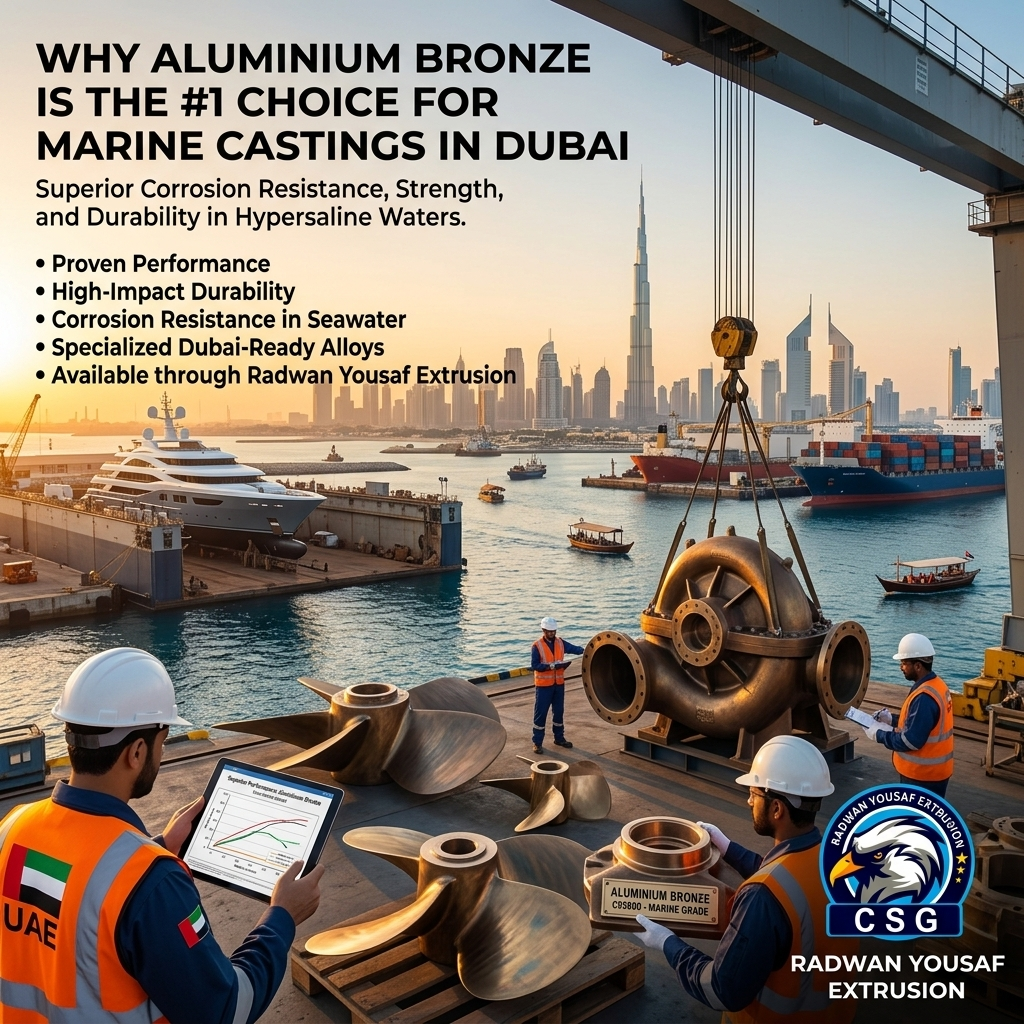
Propellers require a material that can withstand water exposure, mechanical loading, and wear. Aluminium bronze alloys, particularly nickel aluminium bronze, have a long history of use in ship propellers and other marine hardware.
The material’s combination of mechanical properties and seawater corrosion resistance makes it suitable for these demanding applications.
6. Good Resistance to Marine Biofouling
Copper-based alloys can also provide resistance to the attachment of some marine organisms. This property contributes to their use in seawater systems and marine equipment.
This does not eliminate the need for appropriate marine maintenance, but it can be an additional advantage when selecting materials for seawater-contact components.
7. Why Alloy Selection Matters
Not all aluminium bronze alloys perform identically. Composition, casting quality, heat treatment, and microstructure can significantly affect corrosion resistance.
Research on UNS C95800 nickel aluminium bronze found that maintaining the specified aluminium content is important for seawater corrosion performance.
For this reason, marine casting manufacturers should select the alloy according to the component’s:
- Seawater exposure
- Operating temperature
- Water velocity
- Mechanical load
- Wear conditions
- Casting size and design
- Required industry specification
Aluminium Bronze Marine Castings in Dubai
For marine projects in Dubai, aluminium bronze can provide a practical combination of corrosion resistance, strength, wear resistance, and long-term durability. Its established use in propellers, valves, pumps, fittings, and other seawater-contact components makes it an important engineering material for marine casting applications.
The key is not simply choosing “aluminium bronze.” The correct alloy grade, casting process, heat treatment, and quality control should match the intended marine application.
Frequently Asked Questions
What is aluminium bronze used for in marine applications?
It is commonly used for propellers, valves, pump components, fittings, valve stems, and heat exchanger waterboxes.
Is aluminium bronze resistant to seawater?
Yes. Aluminium bronze alloys generally provide good seawater corrosion resistance, although performance depends on the specific alloy, microstructure, water conditions, and operating environment.
Is nickel aluminium bronze suitable for marine castings?
Yes. Nickel aluminium bronze is an important group of commercial aluminium bronzes used in marine applications where a combination of strength and corrosion resistance is required.
Why is aluminium bronze used for marine valves?
It combines mechanical strength with resistance to seawater corrosion and is established in marine valve and fitting applications.
Can aluminium bronze be used for ship propellers?
Yes. Aluminium bronze and nickel aluminium bronze have long been used for ship propellers and related marine components.