Brass Casting Solutions in Dubai for Industrial Applications
Dubai’s expanding industrial, construction, engineering, and manufacturing sectors require dependable metal components for machinery, equipment, infrastructure, and specialized applications. Brass casting solutions in Dubai help businesses produce customized components that meet specific dimensions, material requirements, and performance needs.
Metal casting provides an efficient way to manufacture components with different shapes and sizes. Manufacturers pour molten metal into a prepared mold and allow it to cool and solidify into the required form. Additional machining and finishing can improve dimensional accuracy and prepare components for their intended applications.
A professional casting company in Dubai can support businesses with different casting methods and materials. Depending on the project, manufacturers may provide sand casting, cast iron casting, aluminium casting, and brass casting, along with related machining and finishing services.
Why Choose a Professional Casting Company in Dubai?
Selecting an experienced casting company in Dubai can help businesses manage projects that require customized metal components. Manufacturers can evaluate technical drawings, dimensions, material specifications, production quantities, and application requirements before starting the casting process.
A structured manufacturing process can improve consistency and help businesses receive components that match their requirements. Mold preparation, material selection, molten-metal handling, cooling, inspection, and finishing all contribute to the final quality of a casting.
Businesses can also benefit when one manufacturer provides both casting and machining capabilities. This approach simplifies project coordination and allows customers to manage multiple production requirements through a single supplier.
Sand Casting for Flexible Manufacturing
Sand casting remains a practical method for producing metal components in different shapes and sizes. Manufacturers create molds from specialized sand and then pour molten metal into the prepared cavity.
The flexibility of sand casting makes it suitable for customized components, replacement parts, machinery components, and industrial products. Manufacturers can adapt the mold design according to the required component dimensions and specifications.
Professional sand casting services can support both individual components and production requirements. Customers can provide technical drawings and material specifications so manufacturers can develop an appropriate casting process.
After casting, manufacturers may perform machining and finishing operations to achieve the required dimensions and surface characteristics.
Cast Iron Casting for Durable Components
Cast iron casting provides a reliable option for applications that require strength, durability, and wear resistance. Manufacturers use cast iron to produce machinery components, equipment housings, industrial parts, structural components, and replacement products.
A suitable cast iron casting service can help businesses manufacture complex components without relying entirely on machining from solid material. Casting creates the basic component shape, while additional machining can achieve the precise dimensions required for installation or operation.
Manufacturers should consider the component’s operating environment and technical requirements when selecting the appropriate cast iron material and production method.
Aluminium Casting for Lightweight Components
Aluminium casting offers an effective solution for applications that require lightweight components with useful strength and corrosion resistance. Aluminium’s relatively low weight makes it suitable for industries seeking to reduce component weight while maintaining practical performance.
Manufacturers use aluminium casting to produce machinery parts, equipment components, construction-related products, and customized industrial components. The process allows businesses to create different shapes according to their technical requirements.
Professional aluminium casting services can also include additional machining and finishing. Manufacturers can machine cast aluminium components to create accurate holes, threads, surfaces, and other functional features.
When selecting aluminium casting, businesses should consider the component’s dimensions, operating conditions, required properties, and final application.
Brass Casting for Specialized Components
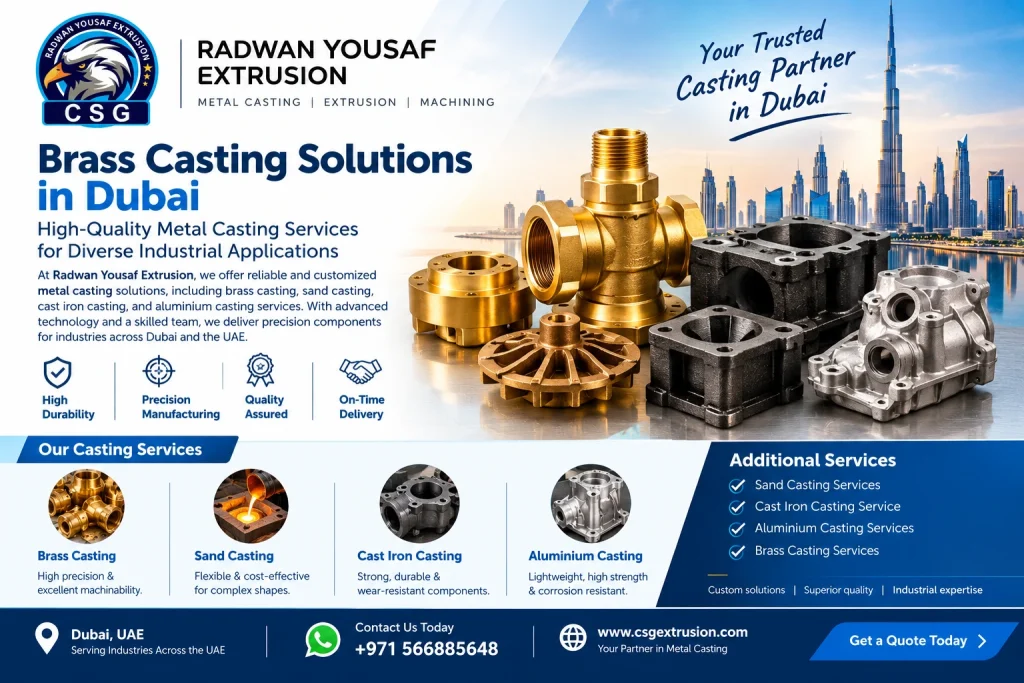
Brass casting supports the production of versatile components for engineering, industrial, and commercial applications. Brass offers useful machinability and corrosion resistance, making it suitable for various types of components.
Industries use brass components for fittings, valves, hardware, mechanical parts, and specialized products. Manufacturers can create customized brass castings according to drawings, dimensions, and production specifications.
Professional brass casting services can combine casting with machining and finishing to produce components with the required dimensional accuracy. This integrated approach can help businesses simplify their manufacturing workflow.
Benefits of Brass Casting Services
Choosing professional brass casting services provides several advantages for businesses requiring customized metal components. Manufacturers can produce complex shapes while selecting brass according to the project’s technical requirements.
Brass also works well with machining processes, allowing manufacturers to refine cast components after production. Machining can create accurate holes, threads, grooves, and functional surfaces.
Businesses should provide complete information about the intended application before production begins. Details such as dimensions, quantity, drawings, material requirements, and finishing expectations can help manufacturers plan the appropriate process.
Combining Casting and Machining
Casting often provides the basic shape of a component, but many industrial parts require further processing. Manufacturers can use machining to achieve tighter tolerances and functional surfaces after casting.
Combining casting with machining can create a smoother manufacturing workflow. Customers can coordinate casting, dimensional correction, drilling, threading, and finishing with the same supplier.
This approach can be particularly useful for customized components where the manufacturer must follow specific technical drawings and dimensional requirements.
Quality Considerations for Metal Casting
Quality starts with proper planning. Manufacturers should review the component design and identify the appropriate material and casting method before production begins.
During manufacturing, proper mold preparation and controlled pouring can help create consistent castings. After cooling, manufacturers can inspect components and perform machining or finishing according to the required specifications.
Businesses should also communicate any specific quality requirements before production. Clear technical information allows the manufacturer to understand the expected dimensions, material characteristics, surface finish, and application requirements.
Applications Across Different Industries
Casting supports a wide range of industrial applications. Manufacturers can produce components for engineering, construction, machinery, equipment, infrastructure, and other specialized sectors.
Sand casting services can provide flexible solutions for customized and larger components. Cast iron casting service can support durable industrial parts, while aluminium casting services can help businesses produce lightweight components.
At the same time, brass casting services can support applications that require versatile and machinable metal components. Selecting the appropriate material and process remains important for achieving the desired result.
How to Select the Right Casting Service
Businesses should consider several factors when selecting a casting supplier. Manufacturing experience, available materials, casting methods, machining capabilities, quality control, production capacity, and customization options can all influence the final outcome.
A capable supplier should understand technical drawings and communicate clearly about production requirements. Customers should also discuss material selection, component dimensions, quantities, finishing requirements, and delivery expectations before starting a project.
Working with a manufacturer that provides multiple casting options can make it easier to manage different component requirements over time.
Why It Matters
Reliable casting supports many of Dubai’s industrial and engineering requirements. From sand casting and cast iron casting to aluminium casting and brass casting, manufacturers can select suitable processes according to the component’s design and application.
Professional brass casting services, aluminium casting services, and sand casting services can help businesses obtain customized components while maintaining a structured manufacturing process. By combining casting with appropriate machining and finishing, manufacturers can produce accurate and functional metal parts.
For businesses searching for dependable brass casting solutions in Dubai, selecting an experienced manufacturing partner with diverse casting capabilities can simplify production and support consistent results across industrial projects.